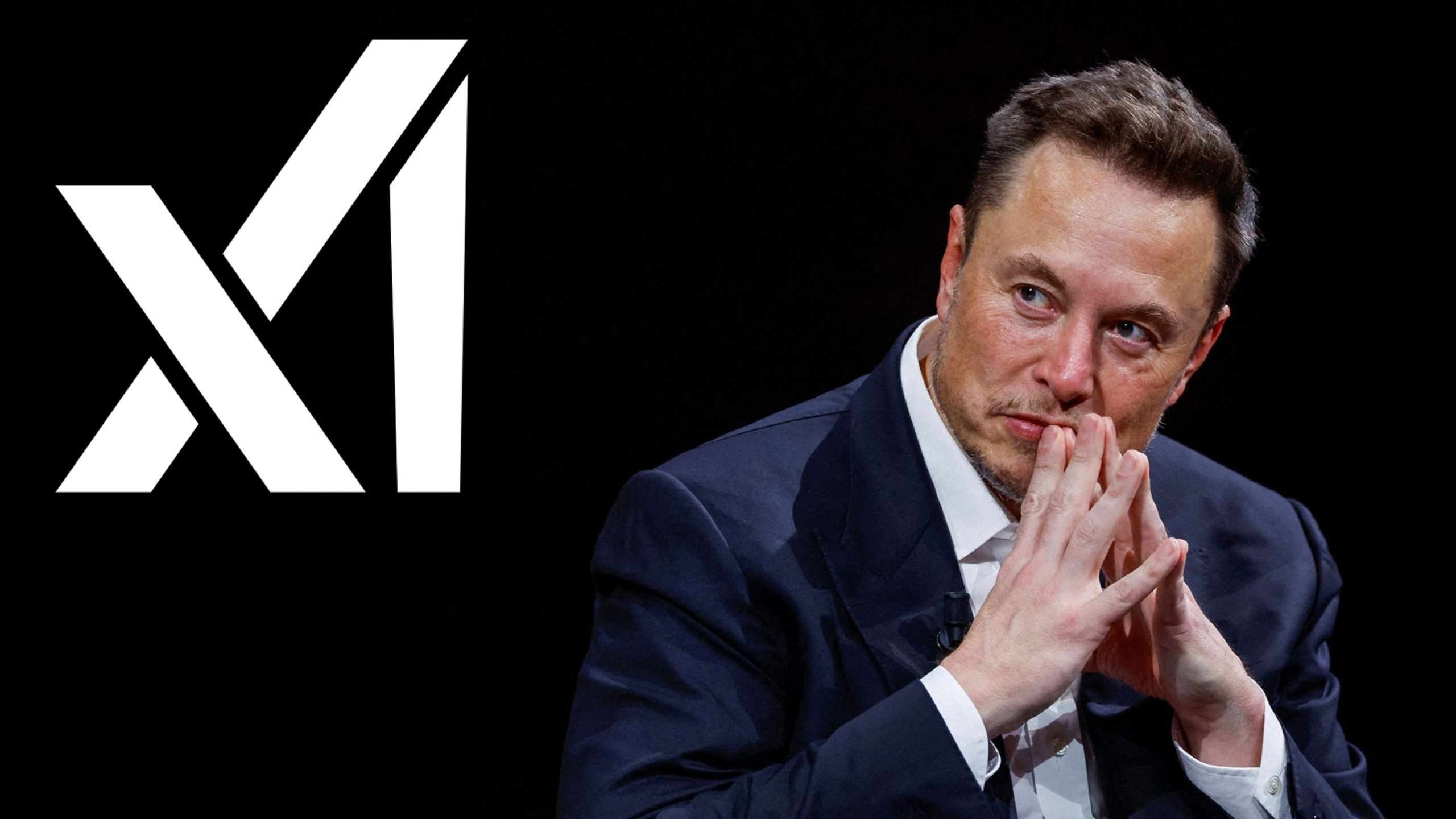
Elon Musk’s artificial intelligence startup, xAI, is in advanced talks to raise $15 billion at a valuation of roughly $230 billion, according to a report by The Wall Street Journal. If completed, the deal would more than double xAI’s valuation since March and place the company among the world’s most valuable private tech firms.
The Journal, citing people familiar with the discussions, said the fundraising pitch has been circulated to potential investors by Jared Birchall, Musk’s longtime wealth manager. It remains unclear whether the $230 billion figure represents a pre- or post-money valuation. Reuters reported that xAI declined to comment in detail on the report, responding to a media inquiry with the phrase “Legacy Media Lies.” Birchall could not be reached for comment, and Reuters was unable to independently verify the fundraising terms.
xAI was founded in 2023 as Musk’s answer to the rapid rise of companies such as OpenAI, Anthropic, and Google DeepMind. Earlier this year, the startup was merged with X Corp., Musk’s social-media platform formerly known as Twitter, in a move designed to integrate artificial intelligence directly into X’s ecosystem. The company has since rolled out Grok, a conversational AI chatbot for premium X subscribers, and announced plans to build a supercomputer facility in the U.S. to support model training.
If finalized, the new funding would mark one of the largest capital raises in the AI industry’s short but explosive history, surpassing several recent rounds by competitors and underlining how capital-intensive frontier AI development has become.
The Business Logic Behind the Bet
At face value, the deal is another data point in a broader pattern: the AI arms race has entered a phase where dollars, not just data, define competitiveness. Building and running large-scale AI models now requires staggering resources, compute power, data infrastructure, chip supply, and energy capacity.
For Musk, the potential $15 billion raise is as much about positioning as it is about performance. xAI’s valuation, if confirmed at $230 billion, would push it into a stratospheric tier alongside OpenAI, which is estimated to be worth between $150 billion and $200 billion depending on secondary-market estimates. That’s not a valuation based on revenue, it’s a valuation based on expectation: that whoever builds the most capable, cost-efficient AI model will dominate the next decade of digital infrastructure.
The wager mirrors a broader shift in investor psychology. Where once valuations tracked profitability, the AI sector is seeing them tied to computational scale, the sheer ability to train and deploy large models. That shift reflects an emerging truth: in the world of frontier AI, scale is strategy.
Musk’s Expanding Tech Constellation
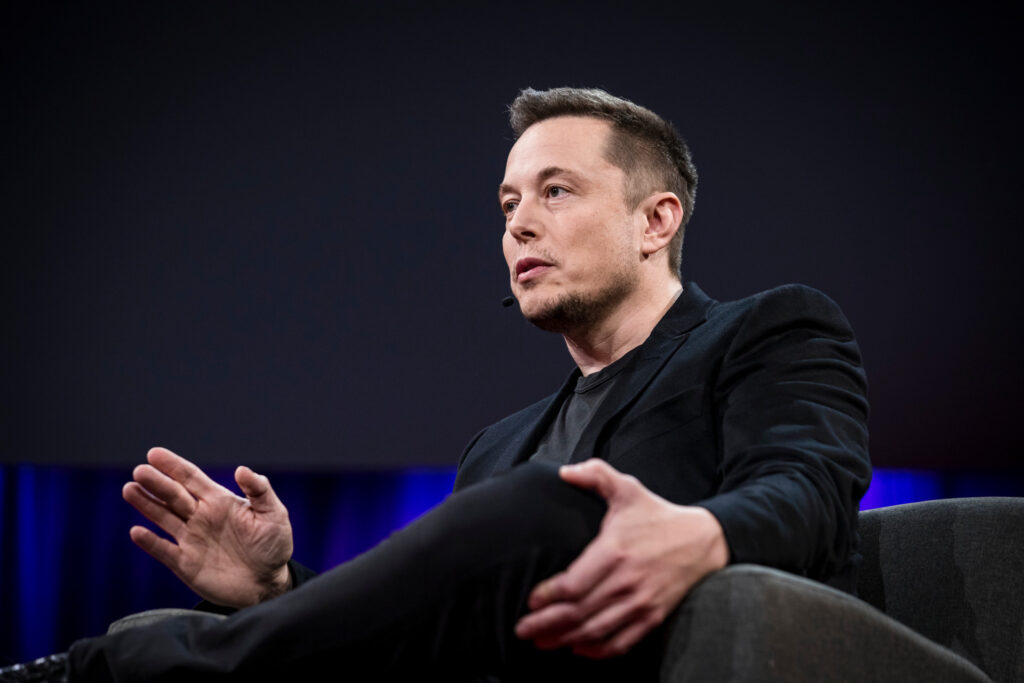
For Musk, xAI isn’t a standalone moonshot, it’s part of a vertically integrated vision that ties together Tesla’s automation, SpaceX’s compute and data networks, and X’s distribution platform. If xAI’s systems become central to those operations, Musk could own a self-reinforcing technology loop: models that power products, products that generate data, and data that train new models.
That integration helps explain why investors might accept a valuation as high as $230 billion. xAI’s potential isn’t confined to the chatbot space, it extends into autonomous systems, robotics, and global communications. To Musk’s supporters, that’s not hype; it’s the long-game infrastructure play.
But the risks are equally immense. Scaling AI at this magnitude demands not only capital but consistent innovation and public trust, two assets Musk has occasionally strained. His public criticism of rivals like OpenAI and Anthropic, coupled with his combative stance toward the press, complicates perceptions of xAI’s transparency and governance.
A Market Redefined by Velocity
Whether or not the fundraising succeeds, the signal it sends is unambiguous: the AI race is consolidating. Capital, compute, and influence are converging in fewer hands, faster than regulation can adapt.
This week’s report underscores the new reality that AI is no longer a speculative frontier, it’s a core economic sector. Investors are treating AI infrastructure like 20th-century oil fields or 1990s fiber-optic networks: whoever builds and controls it will define the pace of progress.
Still, with valuations doubling within months, even seasoned analysts are cautious. As Reuters noted, the deal remains unverified, and the figures could shift. But regardless of its final form, Musk’s latest capital push captures the defining paradox of this era: extraordinary ambition amid unprecedented uncertainty.
The Broader View
In the end, the story of xAI’s possible $15 billion raise is not just a tale of one billionaire’s next big bet. It’s a measure of how high the stakes have become in the pursuit of artificial intelligence and how quickly the financial architecture of technology is being rewritten.
If confirmed, the deal would solidify Musk’s role not only as an industrialist of electric cars and rockets but as one of the primary architects of the AI economy itself. Whether history remembers this as brilliance or overreach will depend on what xAI builds with the billions it’s seeking to secure.