
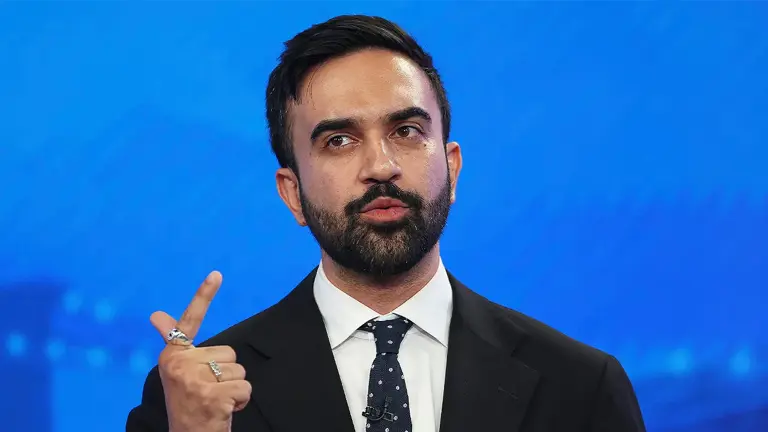
The election of Zohran Mamdani as mayor-elect of New York City is more than a political shift – it carries implications for how business operates, how real estate is valued, and how major cities compete for capital in the coming decade.
A new economic philosophy at City Hall
Mamdani, a 34-year-old state assemblymember, campaigned on a bold platform centred on affordability, housing reform and transit. He is set to become the first Muslim and first South Asian mayor of New York, and the youngest in more than a century.
His agenda signals a potential recalibration of the city’s long-standing public-private balance. For firms used to operating under the “developer-friendly” New York model, this could mean greater demands for social value, tighter conditions on projects and increased regulatory scrutiny.
“Mamdani’s election signals the end of laissez-faire city planning,” says one Manhattan real-estate economist. “Every major developer will now need to demonstrate social value, not just financial return.”
Real estate: a re-balancing act
New York’s property market has served as a global investment magnet for decades. Now, that dynamic may shift.
Mamdani has pledged measures such as expanded rent-stabilisation, vacancy taxes on under-used luxury properties and stronger affordable-housing mandates for new developments.
In the short term, this may lead to pause and recalibration: developers delaying launches, foreign investors reassessing exposure, deal structures adding risk premia. Over the long term, however, markets may see upside – a more stable housing environment could attract institutional capital seeking less volatility.
Crucially, execution will matter: this is not just about rhetoric. If the mayor-elect can deliver through legal changes and workable zoning, New York could become a model of inclusive urban investment rather than just another overheating global asset city.
Business climate: cautious optimism meets realism
Financial firms, media giants and global headquarters have long chosen New York for its network effects. They are unlikely to flee. But they will watch – closely. Mamdani’s campaign emphasised accountability rather than antagonism, and his early outreach to the business community suggests he recognises the city’s economic engine needs to keep running.
In sectors such as fintech and commercial real-estate, the question becomes: will this administration hamper innovation or channel it differently? The most plausible outcome is selective progressivism – tougher regulation where profits intersect with inequality, coupled with collaboration in innovation, renewables and infrastructure.
Global investors and the symbolism of the city
Globally, New York remains a symbolic benchmark for urban investability. Mamdani’s win doesn’t immediately undermine that, but it does signal a shift in mindset. Cities are no longer purely growth engines: they are expected to be equitable, sustainable and inclusive. Investors from Europe, the Middle East and Asia will watch what this administration does about zoning, transit access and housing supply.
If Mamdani maintains fiscal discipline, commits to transparent governance and delivers on infrastructure, the city may strengthen its proposition as a leading “inclusive-growth” metropolis. If not, risk premiums could rise.
The road ahead: credibility through delivery
The challenges Mamdani faces are substantial: New York’s housing shortage, fiscal stress (including mounting transit deficits), rising cost of living and a sprawling city bureaucracy.
For business and real-estate markets to stay confident, the new administration must convert promise into practicable policy.
In short: New York remains the world’s stage for urban capitalism. What’s changing is the expectation that growth must now be matched with shared benefit. How Mamdani navigates that transition will tell us not just about the city’s future – but about the future of major global metros.